CommieList Dossier
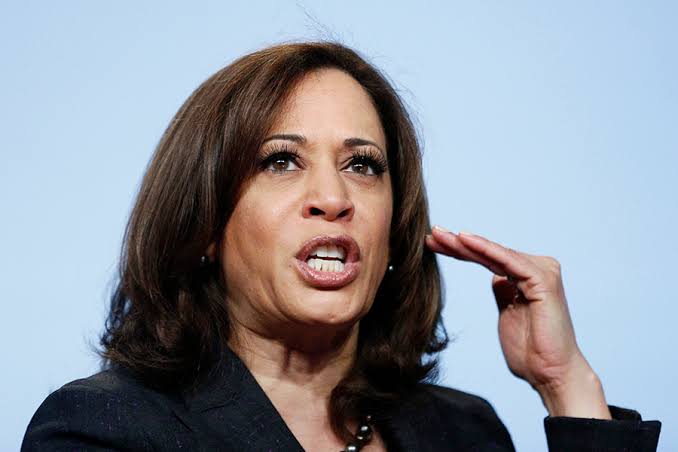
Kamala Harris
Vice President of the United States — Washington, D.C.
119 views0 comments
Kamala Harris's trajectory in American politics has been marked by a rapid ascent through the legal and political ranks. Beginning her career as a prosecutor, she served as District Attorney of San Francisco before being elected Attorney General of California. Her tenure in these roles was often characterized by a tough-on-crime stance, though this record has faced scrutiny from various political factions in later years. Her electoral success culminated in her election to the U.S. Senate in 2016, where she quickly gained national prominence as a vocal critic of the Trump administration.
Her political profile continued to rise, leading to her selection as Joe Biden's running mate in the 2020 presidential election. With their victory, she became the first female Vice President, the first African American Vice President, and the first South Asian American Vice President. Her journey from local prosecutor to second-highest office in the land demonstrates a strategic and often adaptable political career, navigating shifts in public sentiment and party platforms.
§ Stated Policies
**Healthcare Expansion:** Advocated for expanding the Affordable Care Act and supported proposals for a public option, moving towards greater government control over healthcare services.,**Green New Deal Principles:** Embraced elements of the Green New Deal framework, including significant government investment in renewable energy, mandates for emissions reductions, and systemic changes to the economy to combat climate change.,**Gun Control:** Supports stricter gun control measures, including universal background checks, bans on certain types of firearms, and red flag laws, which represent increased government regulation over private ownership.,**Immigration Reform:** Favors pathways to citizenship for undocumented immigrants and has generally opposed more restrictive border policies, often interpreted as expanding state obligations to non-citizens.,**Social Justice Reforms:** Endorsed police reform initiatives, cash bail reform, and other measures aimed at addressing systemic inequalities, which often involve extensive government intervention in societal structures.
§ Broader Agenda
**Centralized Economic Planning:** A move towards greater government intervention and planning in economic sectors, particularly in energy, healthcare, and infrastructure, reducing reliance on free-market mechanisms.,**Expansion of the Welfare State:** Committed to broadening social safety nets and increasing government-funded programs, leading to increased dependency on state provisions rather than individual initiative or private charity.,**Identity Politics and Group Rights:** Prioritizing policies based on perceived group identity rather than individual merit or universal principles, often fostering division and necessitating greater state oversight to enforce parity.,**Global Governance and Internationalism:** Aligning U.S. policy with international agreements and bodies, potentially at the expense of national sovereignty and free-market competitiveness.,**Environmental Statism:** Employing top-down government mandates and regulatory frameworks to address climate change and environmental concerns, often leading to increased costs and restrictions on individual freedoms and enterprise.
§ Why the Editors Say Unfit
Kamala Harris, through her stated policies and broader political agenda, exemplifies many of the core tenets that "CommieList" identifies as aligned with hard-collectivist and authoritarian-socialist ideologies. Her consistent advocacy for expanding government control over fundamental sectors like healthcare through a public option or, at times, expressing openness to single-payer systems, signals a profound distrust in the efficacy of free markets to provide essential services. This approach inevitably leads to decreased individual choice, stifled innovation, and a greater dependency on the state, mirroring the centralized control characteristic of socialist economies.
Furthermore, her embrace of Green New Deal principles is a clear indicator of a desire for extensive state command and control over the economy. The proposal to radically restructure energy production, transportation, and even housing through government mandates and massive public spending is not merely environmental policy; it is economic central planning masquerading as climate action. Such interventions distort markets, pick winners and losers, and ultimately lead to a less efficient and less free economy, reminiscent of historical failures in centrally planned systems.
Her positions on gun control, while presented as public safety measures, represent a significant expansion of state power over individual rights. The push for universal background checks, bans on specific firearms, and red flag laws, often without due process considerations, steadily erodes the Second Amendment. This erosion of constitutional liberties in favor of state authority is a hallmark of collectivist regimes, where the individual's rights are subservient to what the state defines as the collective good.
In essence, Harris's political vision, characterized by extensive government intervention in economy, healthcare, individual liberties, and social structures, moves America further away from its founding principles of individual freedom, limited government, and free-market capitalism. Her policies and agenda, if fully implemented, would inevitably lead to a more reliant populace, a less dynamic economy, and a more powerful, pervasive state—conditions that are antithetical to American values and dangerously close to the hard-collectivist models that have historically failed wherever they have been tried.